Sold on this site
Cairns city jump
Reef, rainforest, city
- LandingEdmonton field
- HeightUp to 15,000 ft
- Day3 hours
Guides
Language
Currency
Look up datesfrom $249 · free to cancelFind a stop on the map
The quick version
A Cairns skydive over the Great Barrier Reef shows the reef, the rainforest ranges and the city, while Mission Beach adds islands and a beach landing.
What you see
Map of 11 stops
First pick a route, then tap any pin or stop for details and Google Maps.
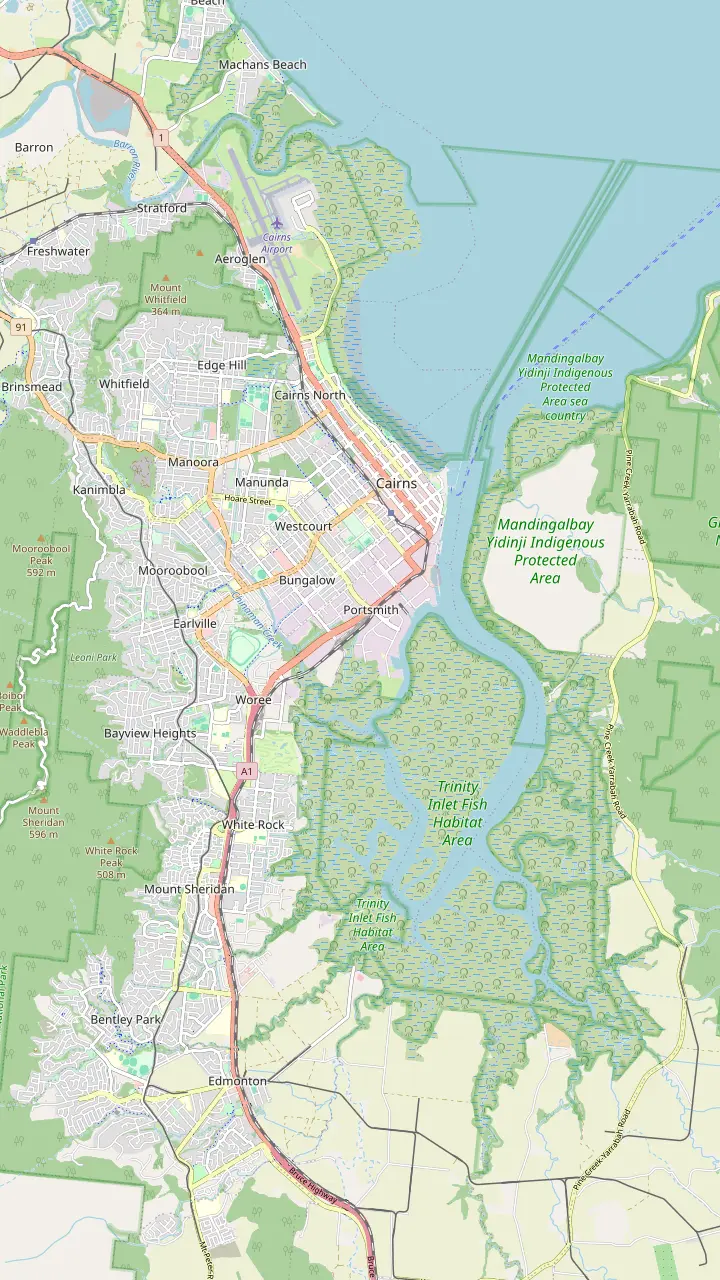
Check-in for the Cairns jump is at the Reef Fleet Terminal, 11 Spence Street.
Google MapsCairns jumpers land at the field on Page Road, Edmonton, and ride a bus back to the office.
Google MapsThe airport is 5.5 km from the city, about a 15-minute drive from the check-in.
Google Maps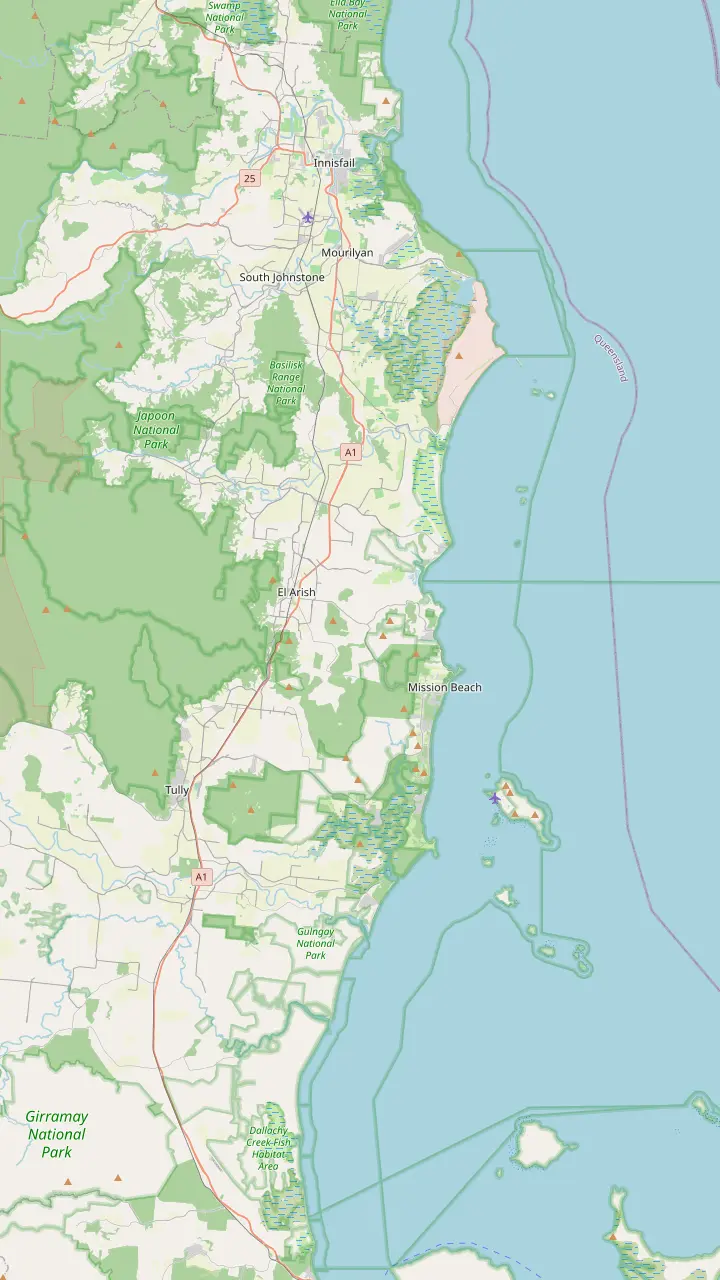
The Mission Beach drop zone is at 39 Porter Promenade, a few steps from the sand.
Google MapsMission Beach jumps take off from Tully Airport, about 25 minutes away by shuttle.
Google MapsDunk Island lies offshore from the Mission Beach drop zone.
Google MapsDjiru National Park sits on the doorstep of the Mission Beach drop zone.
Google MapsThe Mission Beach jump overlooks the reef and islands like Dunk and Barnard.
Google Maps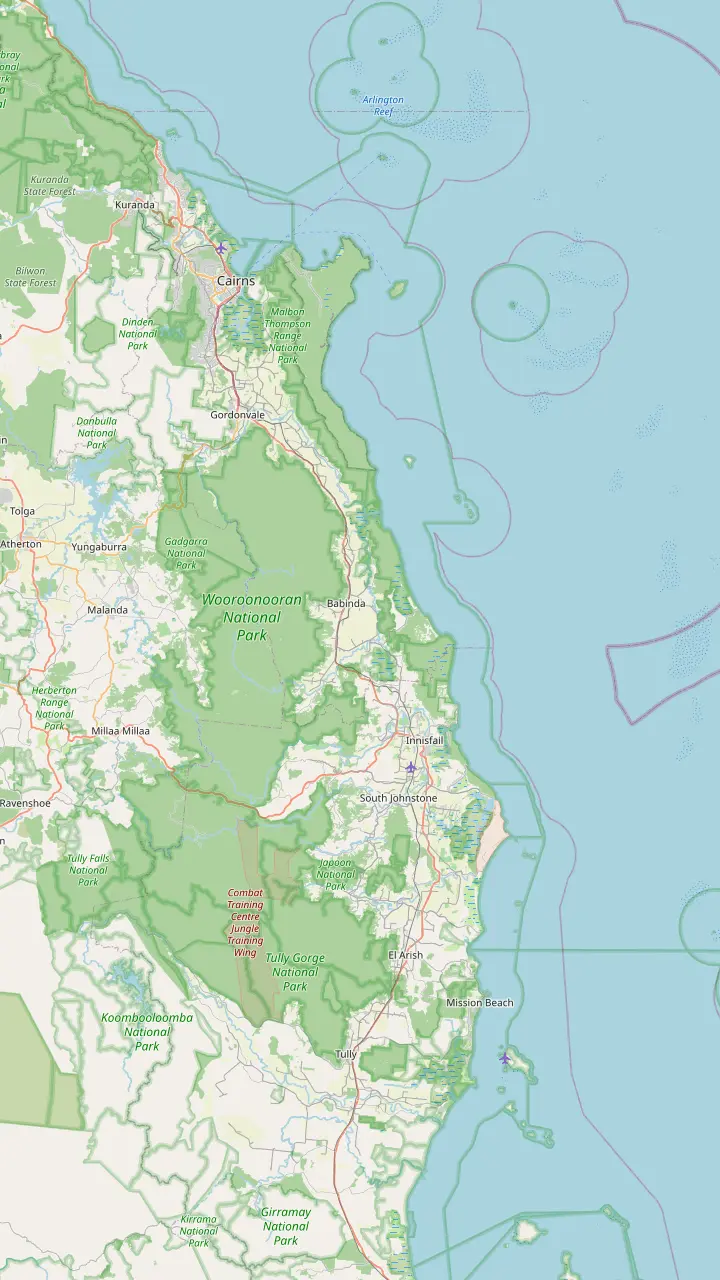
The Cairns jump freefalls over the reef, the rainforest and the city.
Google MapsThe Mundoo jump goes from up to 14,000 feet and offers a beach landing option.
Google MapsMission Beach is a 2-hour drive south from Cairns.
Google MapsMapping data © OpenStreetMap contributors
From the open door the reef, the rainforest ranges and the islands sit on one horizon. What you see depends on which drop zone you fly from, where you land and how clear the sky is that morning.
Editorial team, cairnsskydive.top · Updated November 8, 2026 · 7 min reading time
Summary view
A Cairns skydive over the Great Barrier Reef starts with a view most people only see from an airliner window, and this time the window is open. Skydive Australia describes the Cairns freefall as being over the reef, the lush green rainforests and the cityscape of Cairns.1 The reef sits out to the east as a scatter of pale shapes on dark water, the city and the inlet sit below, and the ranges rise behind them in a wall of green.
From a boat deck the size never quite registers. The Great Barrier Reef Marine Park covers 344,400 square kilometres, and inside it the Reef Authority lists roughly 3,000 separate reefs of coral, 300 sandy cays, 600 continental islands and about 150 mangrove islands near the shore.4,3 From the door you see only a corner of that, yet it is the first time the reef reads as a system rather than a single snorkelling stop.
One detail changes how you read the colours. The Reef Authority notes that coral itself covers a mere 7 per cent or so of the Marine Park and World Heritage Area.8 Most of the blue below is open water, seagrass, sand and deeper channels, and the reefs show as the lighter patches within it. Knowing that, a Great Barrier Reef skydive from Cairns makes more sense from altitude: you are looking at a whole marine landscape, not a carpet of coral.
Drop zone by drop zone
| Jump | Below you | On the horizon | Landing |
|---|---|---|---|
| Cairns | City, harbour, Esplanade | Reef and rainforest ranges1 | Field at Edmonton5 |
| Mission Beach | Beach, Djiru National Park | Reef, Dunk and Barnard islands2,15 | On the sand6 |
| Mundoo | Coast and farmland | Reef offshore | Beach landing option |
From the operators' own pages and the listings; what you actually see depends on the cloud that morning.1,2
The Cairns jump is the one sold on this site, and it keeps everything close to town. Skydive Australia's check-in desk sits in the Reef Fleet Terminal, on Spence Street, and the operator says everything from takeoff to landing happens a short distance from central Cairns.12,13 That geography is also the view: the harbour, the marina and the Esplanade shoreline are directly below as the plane climbs, and the shape of the inlet makes it easy to find your bearings again under canopy.
The Cairns skydive view to the west is the rainforest. Tourism Australia says the Cairns region is home to both the Great Barrier Reef and the Wet Tropics World Heritage Rainforest, and from altitude they meet in a single frame.14 The contrast between the dark green slopes and the pale reef water is the image that stays with you, and it is the reason to look west as well as east.
The landing is not on a beach. Cairns jumpers come down at the designated landing area at Page Road, Edmonton, and a bus takes them back to the Cairns office.5 On the canopy ride you see the cane fields and the southern edge of the city grow closer, which is a different kind of view from the reef side. The listing for this jump runs to 3 hours, with a ride back to the Esplanade once you are down.
The reef in numbers
The Reef Authority's tally for the whole Marine Park: roughly 3,000 separate reefs of coral, 300 sandy cays, 600 continental islands and about 150 mangrove islands near the shore.3
Mission Beach is the drop zone people pick for islands and sand. Skydive Australia says the jump looks out over the reef and over islands such as Dunk and Barnard.2 It also notes that the World Heritage rainforest of the Wet Tropics runs right down to the edge of Mission Beach, with Djiru National Park on the doorstep of the drop zone and Dunk Island lying offshore.17,15 From the canopy the islands float just off the beach, close enough to pick out headlands and bays.
The landing is the other reason. Here a sand landing is promised on every jump; the exact strip of beach is chosen on the day from several approved spots, depending on the breeze and the sky.6 Its terms warn that a landing area can bring its own risks, from dunes and tides to animals, so you keep close to your instructor once down.18 For photographs, a beach landing with the islands behind is hard to beat.
The price of that view is distance. Mission Beach lies about 2 hours by road south of Cairns, and the planes there leave from Tully Airport, a shuttle ride of some 25 minutes from the drop zone.19,20 Free return transfers run from Cairns.21 That listing is sold as 5 hours to 1 day, so treat it as the whole outing rather than something squeezed into a morning, and pack swimmers for the wait between loads.22
Which view is yours
Read the wish closest to yours and the drop zone that answers it.
If I want the reef and the city in one frame
The Cairns jump
It freefalls over the reef, the rainforests and the cityscape of Cairns.1
If I want islands below me as I land
Mission Beach
The jump overlooks the reef and islands like Dunk and Barnard.2
If I want to land on the beach
Mission Beach
A beach landing is guaranteed every time.6
If I have only a morning free
The Cairns jump
Its listing runs to 3 hours, back at the Esplanade after landing.
If I want the clearest sky
Book August to October
Cairns Aero averages the most clear days in those months.7
Pick your view
Sold on this site
Reef, rainforest, city
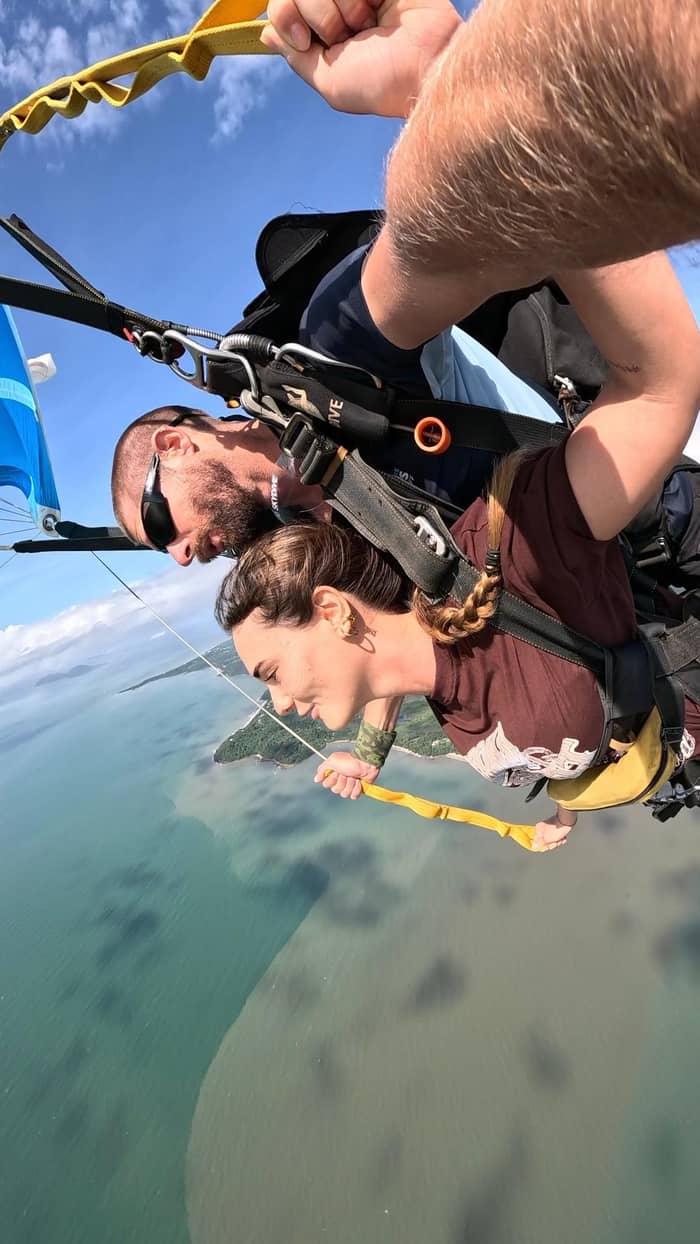
Most scenic landing
Islands and beach
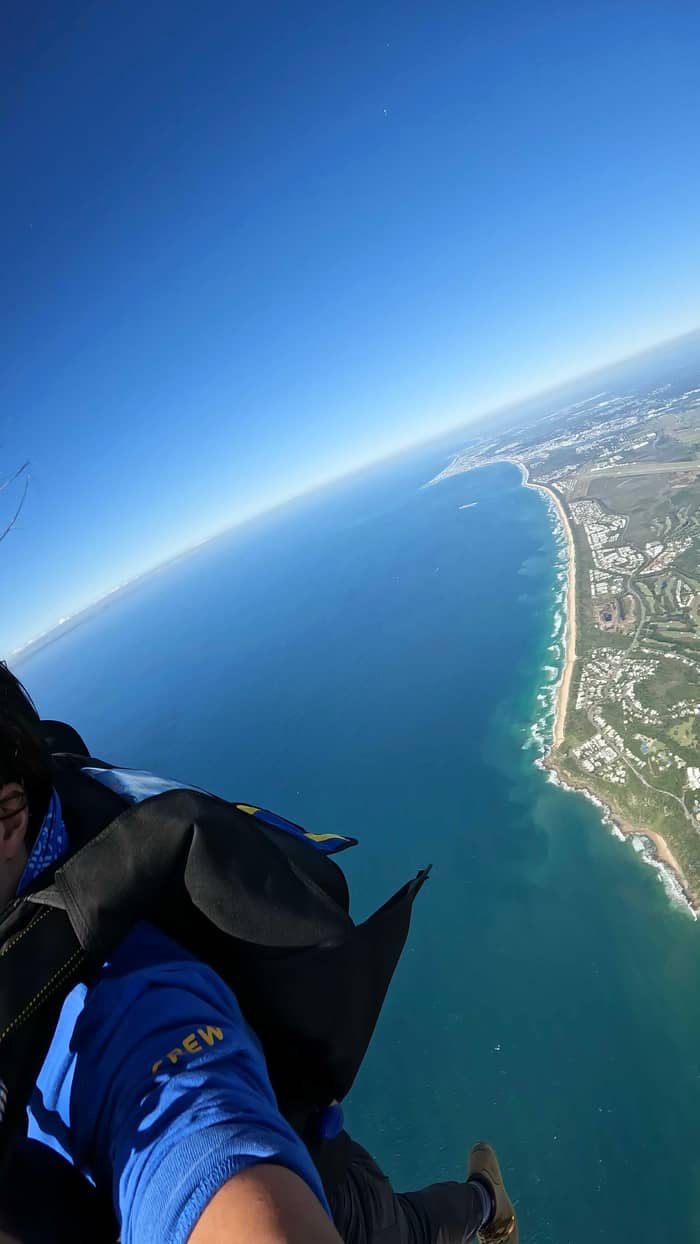
Reef option
Quieter coast
A third operator flies from Mundoo, on the coast between Cairns and Mission Beach. Its listing describes a tandem from up to 14,000 feet, with the option to skydive over the Great Barrier Reef and land on a beach, and optional transfers from Cairns. The record lists separate options with and without the beach landing, so check which one you are booking if the sand is the point for you.
From that stretch of coast the view is quieter: farmland and rainforest inland, a long shoreline and the reef offshore. The listing's freefall runs up to 50 seconds and the parachute ride lasts 5 to 7 minutes, which leaves plenty of time to take in the coast under canopy. The listing runs 4 to 6 hours, between the Cairns and Mission Beach day lengths, so it suits a traveller who wants a beach finish without a full day on the road.
Whichever drop zone you choose, the reef is on the same side: out to the east, over the water. What changes is what lies directly beneath you as you land. Cairns gives you the city and its edge, Mission Beach gives you islands and sand, and Mundoo sits between the two. The map above shows the drop zones side by side so you can see how far each one is from your hotel and how much of the day the drive will take.
What you see, in order
The climb
About 15 minutes of climbing with the coast below the window.9
At the door
The reef to the east, the rainforest behind the city.1
Freefall
The horizon at around 200 km/h.10
Under canopy
Around 5 to 6 minutes to look around.11
Touchdown
The view from the door is also a view across Country. In Tourism Australia's words, Cairns and the land around it belong to the Gimuy-walubarra yidi as Traditional Owners.30 The Cassowary Coast council acknowledges the Bandjin, Djiru, Girramay, Gulngay, Jirrbal, Mamu and Warrgamay Peoples as the Traditional Custodians of the land and sea where the Mission Beach jumps take place.31 Djiru National Park, beside the drop zone, carries one of those names.
According to the Reef Authority, more than 70 Traditional Owner groups hold the Reef as their Sea Country, a bond with these waters older than 60,000 years.32 Knowing that adds weight to a view that most visitors read only as scenery. The reefs and islands below are places with names, stories and responsibilities attached, held by people who have looked after them for a very long time.
The reef is also protected in law, and the protection reaches up to you. The Reef Authority says the Marine Park extends into the airspace above it and into the earth beneath the seabed.16 It is divided into zones, each with its own rules on what is allowed.33 For a skydiver that is a reminder rather than a rule to follow: the sky over the reef belongs to the same protected place as the water.
Video
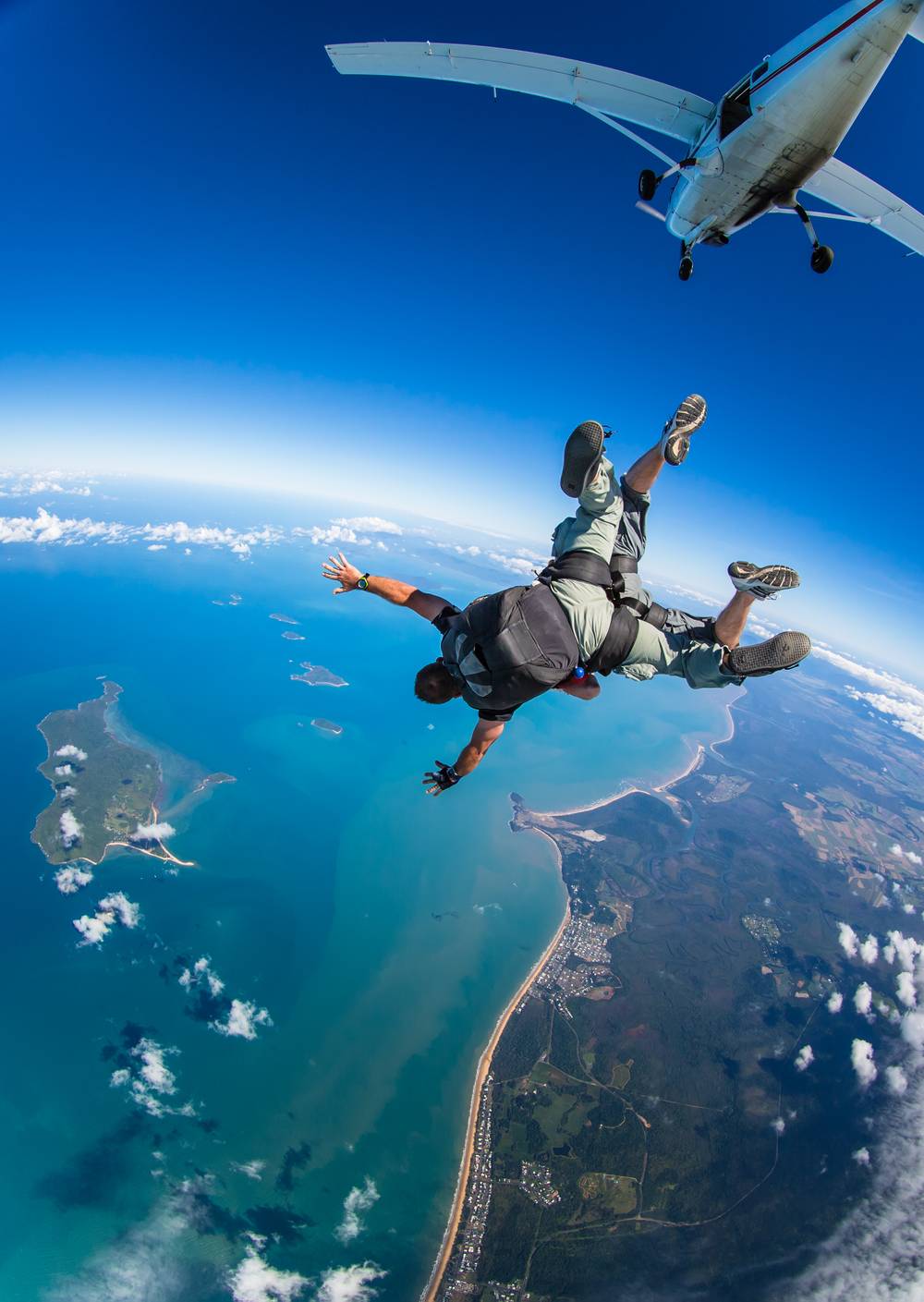
Nick J on YouTube · Nothing is fetched until you hit play.
extends into the airspace above and into the earth beneath the seabed.
For the best view
Clouds decide how much you see. The Bureau of Meteorology's long record for Cairns Aero, 1941 to 2010, counts an average of just 2.5 clear days in February and 12.4 in September.7 The same record shows cloudy days falling from 17.4 in February to 5.4 in October.34 For the widest view of reef and ranges, the late dry season months stack the odds in your favour.
Time of day matters as well. Skydive Australia advises booking the earliest time you can, since conditions shift as the day goes on.27 The Cairns Aero wind record agrees: in every month of the year the morning mean is below the afternoon one.35,36 An early load also leaves time to be moved to a later one if the first is held, so you are less likely to lose the view altogether.
Your eyes are the only camera you carry. Under Australian Parachute Federation rules a camera of your own is off limits on a tandem unless your logbook passes 200 skydives, so a view you want to keep is captured by the instructor's camera if you buy a package.29 Use the climb to look properly: roughly 15 minutes in the aircraft is the longest look at the reef you get on the whole jump.9
FAQ
Skydive Australia describes the Cairns freefall as being over the Great Barrier Reef, the rainforests and the city.1
Every Mission Beach jump ends on the sand, and the Mundoo listing offers a beach-landing option.6
On the operator's landing field at Edmonton, followed by a bus ride back to the office.5
The operator says the Mission Beach jump overlooks the reef and islands like Dunk and Barnard.2
Cairns Aero averages 11.7, 12.4 and 11.8 clear days in August, September and October.7
APF rules keep personal cameras off a jump until you have logged more than 200 skydives.29
Sources
Related guides
Nervous about the jump? Ask a real person here.