Most weather holds
The wet season
November to April
- RainHeavy, with storms
- Best slotThe earliest you can get
- PlanSpare days in Cairns
Guides
Language
Currency
Look up datesfrom $249 · free to cancelChecklist you can tick
Things to do · 9 items
Work through the list and tick items. Progress is saved on this device.
0 / 9 ready
All ticked. All that is left is to pick your date and jump time.
Book a spotCan you skydive in the rain? Not in heavy rain, strong wind or low thick cloud. Light showers and broken cloud are another matter. Here is how the call is made, and what you get back.
Editorial team, cairnsskydive.top · Updated November 8, 2026 · 7 min reading time
Summary view
Skydive Australia, which runs the jump this site books, is plain about it. Heavy rain, strong wind or a low, thick layer of cloud mean the loads are cancelled and moved to another day unless the weather improves; scattered cloud or a passing shower can usually be jumped through or around without spoiling anything.1 So the honest answer to can you skydive in the rain is: not in real rain, and sometimes on a showery day.
The operator also lists what can stretch a jump day even when it goes ahead: wind, cloud, rain, thermal turbulence and air traffic.5 That is why your booking shows a check-in time and not a jump time, and why the operator wants you to treat the jump as taking the whole day.6 In Cairns it reckons many guests are through in an hour and a half, and still wants half a day kept free, because the weather sets the schedule.7
None of this is the instructor being cautious for the sake of it. The weather call protects the aircraft, the canopy ride and the landing, and a delayed jump in clear air beats a rushed one in a squall every time. The rest of this page explains what cloud means under Australian rules, how a weather hold runs, and what happens to your money.
What the sky is doing
| Condition | Usual call | Source |
|---|---|---|
| Heavy rain | Cancel and reschedule1 | Operator FAQ |
| Strong wind | Cancel and reschedule1 | Operator FAQ |
| Low thick cloud | Cancel and reschedule1 | Operator FAQ |
| Partly cloudy | Jump through or around1 | Operator FAQ |
| A few showers | Jump through or around1 | Operator FAQ |
| Cloud on the descent | Approved drop zones only2 | CASA Part 105 |
The final call is made on the day by the drop zone; this table only summarises how the sources describe it.3
In freefall the operator puts your speed at around 200 km/h.10 At that speed raindrops sting on bare skin and smear your goggles, and the instructor loses the clear view of the ground that the whole descent is planned around. A wet canopy and a soaked landing field also make the final minutes harder than they need to be, which is the opposite of what a first jump should feel like.
Wind matters even more than water. A tandem canopy carries an instructor and a passenger, and the landing has to be soft and in the right place. The operator says it uses several landing sites at each location, and that the landing site for each drop can change with the weather, with safety as the priority.11 On a gusty day some pairs may wait while conditions settle, and a strong wind on its own is enough to cancel.1
Cloud is the third factor, and it is the one people ask about most. Low, thick cloud is on the operator's cancel list.1 Higher, broken cloud is often fine, and it can make the climb to altitude spectacular as the aircraft passes white towers on the way up. Whether you may actually fall through it is a legal question, covered in the next section.
Rain by month
Displayed: sun-free hours in mid-month, and days with a minimum of 2.5 mm of precipitation. NOAA, station Cairns Post Office and Cairns Aero, 1991 to 2020.13
Only where a drop zone holds an approval. CASA, the national aviation regulator, says the rules under Part 105 of the Civil Aviation Safety Regulations permit parachutists to enter cloud during a descent at drop zones where a Part 105 approved self-administering organisation has approved it.2 Part 105 sets out the operational rules for aircraft and parachute descents, and its Manual of Standards commenced on 2 December 2023.15,16
CASA's advisory circular on the subject defines a cloud descent broadly. It covers any descent that takes the parachutist into cloud, and also any descent during which the jumper cannot see the drop zone clearly the whole way down.17 The same document says each drop zone must seek its own approval for cloud descents, and that satellite navigation is now widely used to choose the exit point in all conditions, rather than relying only on a visual check.18
In Australia the rules are applied through self-administration: CASA sets the regulations, and approved organisations apply and enforce them.19 For parachuting the Australian Parachute Federation administers the regulations for most activities.20 Whether a particular Cairns or Mission Beach jump may pass through cloud on a given day is therefore a question for the drop zone, and on a tandem it is the instructor who makes the call, not you.
Plan around the weather
Find your situation and see what gives you the best chance of jumping.
If I am in Cairns for one day only
Book the first slot
The operator says early slots give the best chance, as weather changes during the day.12
If I am here in February
Leave spare days
February averages 480 mm of rain with 14 wet days at the Cairns station.13
If The forecast looks bad
Do not cancel yet
The operator decides on the day and warns that forecasts are often wrong.3
If My jump was cancelled
Ask for a new date
It can be rescheduled within 12 months, or refunded if you are leaving.4
If I bought a gift voucher
Plan for a rebooking
Gift vouchers are non-refundable, so a weather day means a new date.14
Seasons for jumping
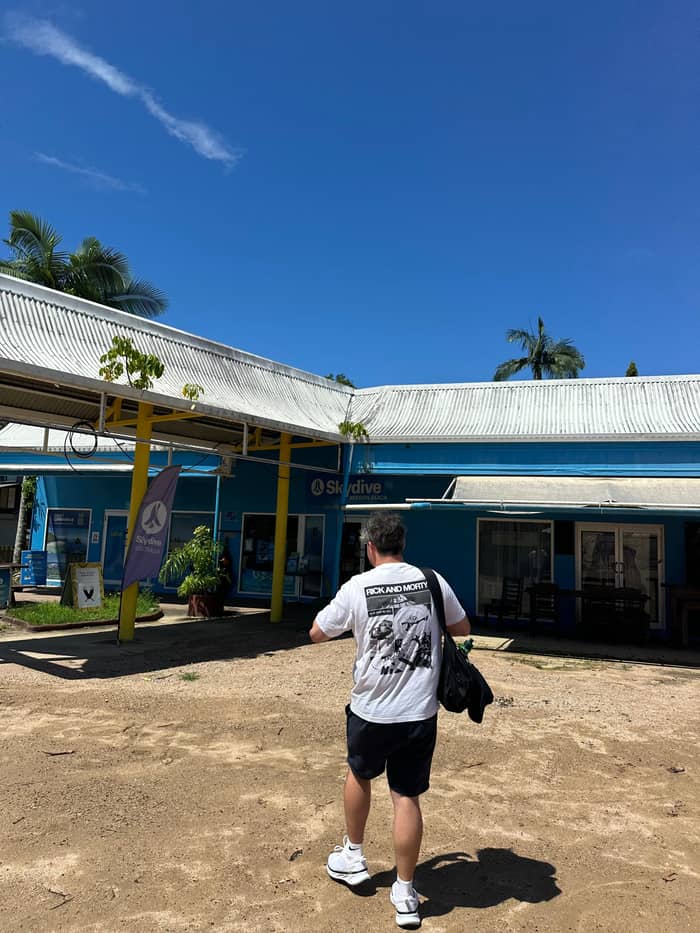
Most weather holds
November to April
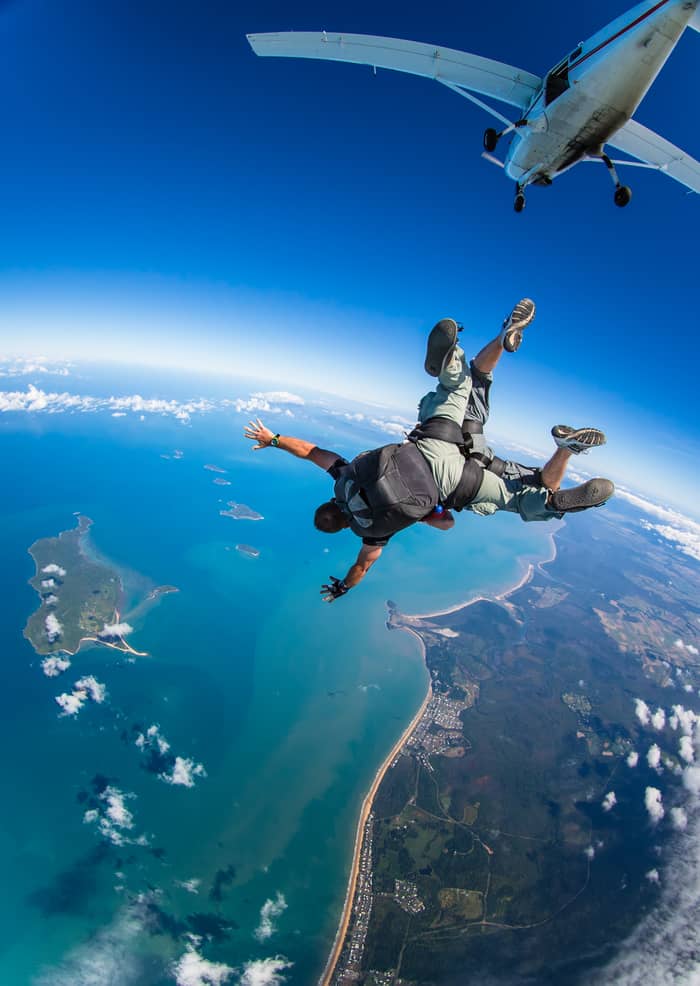
Most margin
May to October
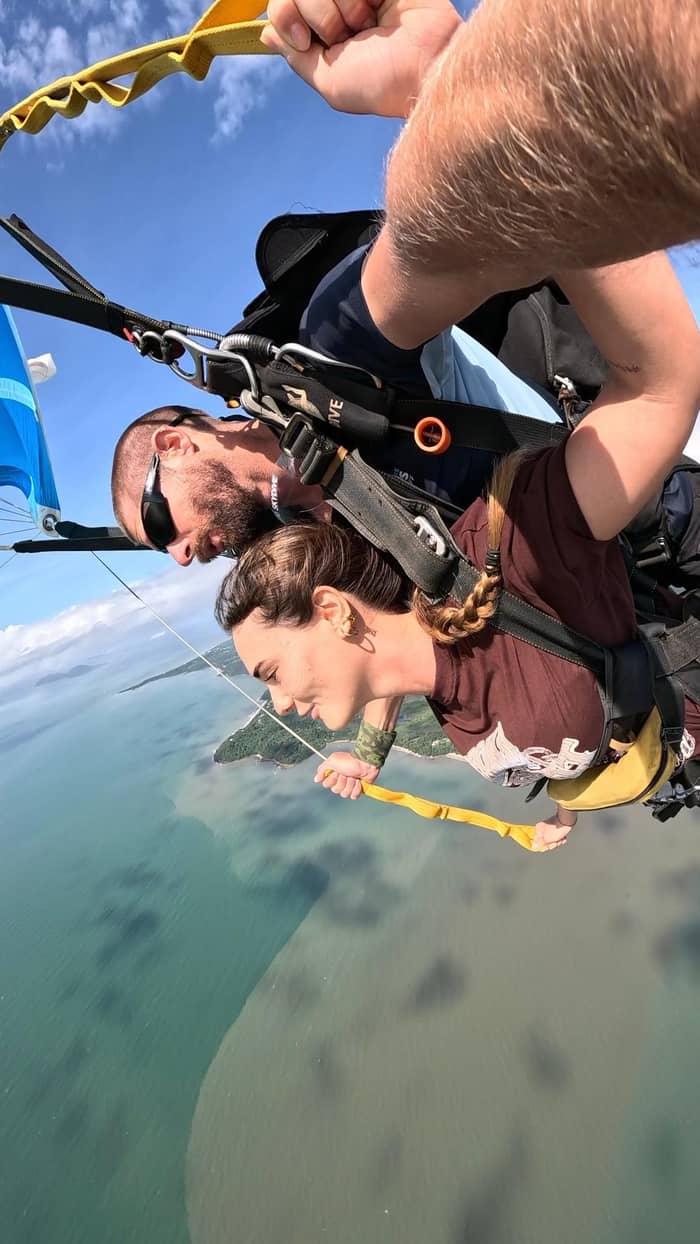
Mixed odds
April and November
The main danger is not the cloud itself but losing sight of others. CASA's circular notes a heightened risk that parachutists who left the same aircraft and opened their canopies collide with each other inside cloud.22 For that reason it says a cloud descent should not be made where the cloud base is lower than an acceptable, standard height for opening a parachute.22 The operator says its instructors open the parachute at about 4,000 ft.23
For the passenger, a pass through cloud is short and strange. The view turns white, the air feels damp and cool, and then the ground reappears below. You are harnessed to an instructor who has trained for exactly this, and your job does not change: arch, breathe, and follow the hand signals you were taught in the briefing.
On a tandem day the more common outcome is that you never meet the cloud at all. Low thick cloud cancels the load before take-off, and the operator says that partly cloudy skies are something it can jump through or around.1 If the sky has gaps, the aircraft may climb to a different exit point; the operator reserves the right to change the altitude and the length of the freefall without that counting as a refund claim.24
A weather day
The day before
Booked jumpers get a message confirming any change of time.8
On the morning
The operator decides on the day, never from the forecast.3
At check-in
Wind, cloud, rain and turbulence can stretch the wait.5
Heavy cloud stays
Low thick cloud or heavy rain means the jump is rescheduled.1
Before you leave
The operator tries to rebook you on another date or at another drop zone.9
Leaving the country
Leaving the state or country before a new date? You can be refunded.4
The operator makes every weather call on the morning of the jump and tells you not to cancel because of a forecast, which it says can make you miss a day that turns out beautiful.3 If you are booked, expect a text message the day before confirming any change of time.8 The listing on this site also warns that jump times may change for operational reasons.
Book early in the day. The operator recommends the earliest possible time to give you the best chance of jumping, because weather conditions change during the day.12 An early slot also leaves the afternoon free if the morning load is held, and the rest of your trip as a fallback if the whole day is lost.
Then be patient. The operator aims to complete your skydive within 3-4 hours, but says skydiving can be a full-day activity.25 Bring something to read, keep water and snacks with you, and treat a hold as part of the price of jumping in the tropics. The day page on this site shows how a normal, unhurried jump runs from check-in to landing.
Video
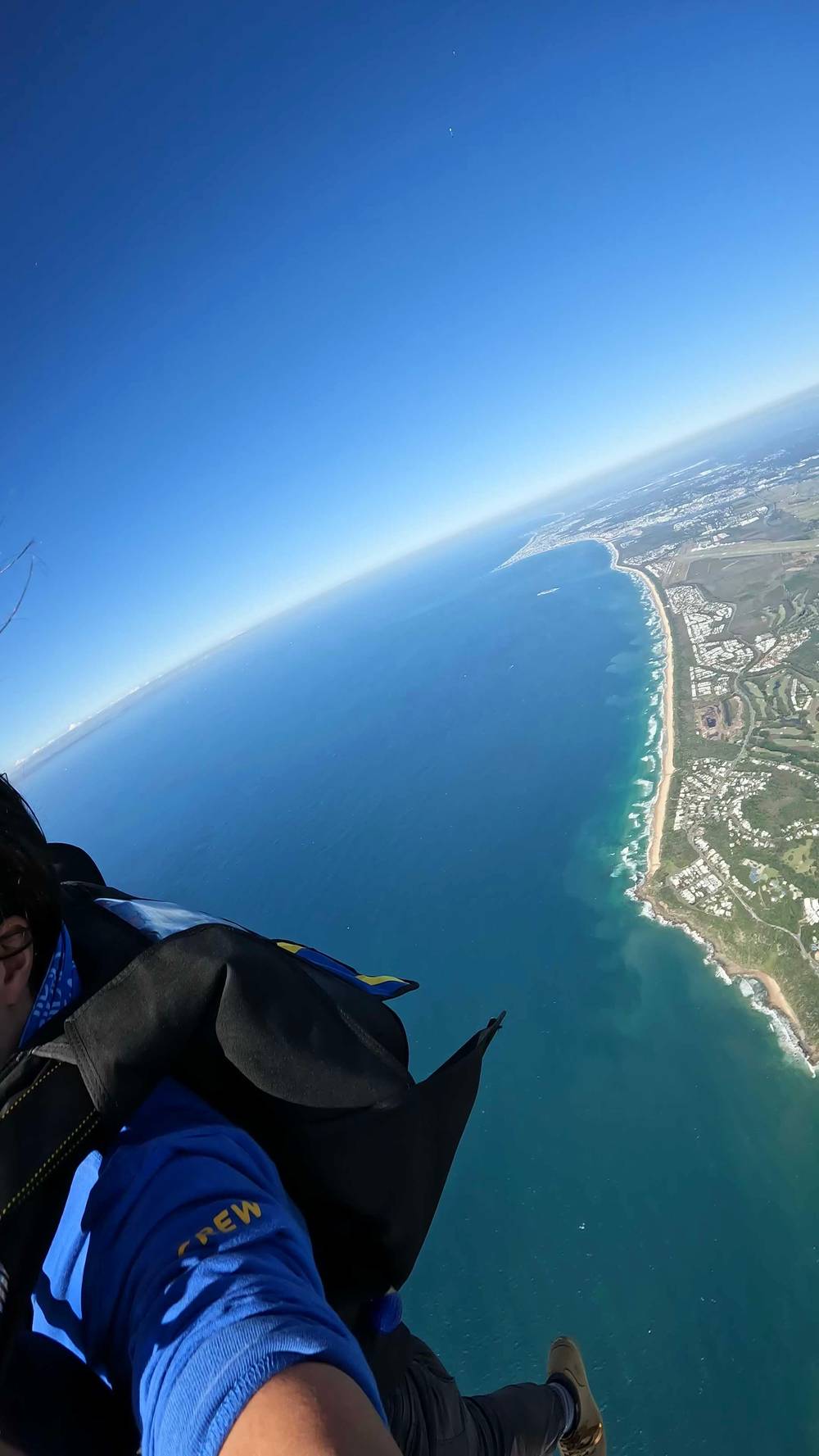
Sam I Am on YouTube · Nothing is fetched until you hit play.
If there is heavy rain, strong wind or low thick cloud coverage we will cancel and reschedule the jumps if it does not clear.
If the weather wins, you do not lose the jump. After a weather cancellation the operator works to rebook you, on another day or at another of its drop zones, before your trip ends.9 Its FAQ gives you 12 months to move a cancelled or postponed jump, and pays you back if leaving the state or the country means you cannot use a new date.4
Gift vouchers are the exception: the operator says they are non-refundable under any circumstance.14 Bookings made through a reseller are refunded through that reseller, not by the operator.26 Through GetYourGuide, the listing on this site gives free cancellation up to 24 hours in advance for a full refund.
The practical lesson is to book the jump early in your Cairns stay, not on your last morning. A weather hold on your first morning can move to the next one; a hold on the day you fly out becomes a refund instead of a skydive. Tell the drop zone your departure date when you check in, so it knows what options you have.
Tourism Australia divides the Tropical North Queensland year into a wet and a dry season: wet from November to April, dry from May to October.27 The wet months, it says, bring heavy rain and tropical storms to Cairns.28 The dry months bring little rain and plenty of sunshine, and they draw the most visitors.29
The station averages show the gap. February brings an average 480 mm of rain, falling on 14 days that each reach 2.5 mm, against only 27 mm on 3 such days in August.13,13 January averages 13 wet days and March 12, against 3 days in September.13,13,13 These readings come from the Cairns Post Office for rain and the airport for temperature, on the ground and not at jump altitude.13
A wet-season jump is still possible. Showers in the tropics often come and go, and a morning slot can slip between them. But if your dates are flexible and the skydive is the point of the trip, the dry months give you far more margin, and the best-time page on this site compares the months in detail.
FAQ
The operator cancels for heavy rain, strong wind or low thick cloud, but can jump around a few showers.1
Partly cloudy skies or a few showers can be jumped through or around, the operator says.1
Australian rules let parachutists enter cloud only where an approved organisation has approved the drop zone.2
CASA notes a collision risk between open canopies in cloud, so the cloud base must not be too low.22
It makes every weather call on the day and advises against going off the forecast.3
Reschedule within 12 months, or a refund if you are leaving the state or country.4
The operator recommends the earliest time, as weather changes during the day.12
Sources
Related guides
Nervous about the jump? Ask a real person here.